Leaving the Cradle: Humanity's Greatest Space Achievements
From a captured V-2 rocket to four astronauts rounding the far side of the Moon right now — the improbable, audacious, ongoing story of how we learned to leave home.
The Earth is the cradle of humanity, but mankind cannot stay in the cradle forever.
— Konstantin Tsiolkovsky, 1911We're Going Back
As I write these words, four human beings — Reid Wiseman, Victor Glover, Christina Koch, and Jeremy Hansen — are hurtling toward the Moon aboard the Orion spacecraft Integrity, launched on April 1, 2026. Tomorrow, they will fly behind the far side of the Moon, temporarily losing all contact with Earth, before the Moon's gravity slings them back home. They are the first humans to leave low Earth orbit in over 53 years.
We're going to the Moon again. And that sentence, casual as it sounds, represents one of the most extraordinary things our species has ever done — or, more precisely, is doing again after a half-century pause.
So before they round that far side, before the signal drops and the world holds its breath — how about a trip down memory lane? Let's trace the full arc: from the first rocket that barely cleared a cabbage field to the spacecraft currently racing toward lunar orbit. Every milestone, every breakthrough, every stubborn dreamer who looked up and refused to accept that the sky was the limit.
This is the story of how we learned to leave home.
The Oldest Dream
Before there were rockets, there were myths. Icarus and his wax wings. Chinese fire arrows strapped to chairs. Jules Verne shooting a cannonball capsule at the Moon in 1865 — from Florida, no less, just 130 kilometers from where the actual Moon rockets would launch a century later. The desire to leave Earth isn't a product of the Space Age. It is the Space Age's origin story.
But wanting to fly and actually flying are separated by the most unforgiving physics in engineering. To escape Earth's gravitational pull, you need to accelerate to roughly 11.2 kilometers per second — about 40,000 km/h. Think of it this way: if you could somehow drive your car straight up at highway speed, it would take you about five and a half hours to reach the Kármán line, the internationally recognized boundary of space at 100 kilometers. A rocket gets there in under three minutes. The energy required to do this — to hurl mass against the fundamental geometry of spacetime — is staggering. And for most of human history, utterly impossible.
Then the twentieth century happened.
Fire and Thrust: The Rocket Pioneers
Three men, working largely independently on three different continents, laid the theoretical and practical foundations for everything that followed.
The father of theoretical astronautics. A self-taught, nearly deaf schoolteacher who, in 1903, published the rocket equation that still governs every launch: Δv = ve ln(m0/mf). He envisioned multi-stage rockets, orbital stations, and space elevators decades before anyone built a rocket that worked.
On March 16, 1926, in a cabbage field in Auburn, Massachusetts, Goddard launched the world's first liquid-fueled rocket. It flew for 2.5 seconds, reached an altitude of 12.5 meters, and landed 56 meters away in a cabbage patch. The local newspaper headline: "Moon Rocket Misses Target by 238,799½ Miles." He filed 214 patents before his death, and NASA's Goddard Space Flight Center bears his name.
The brilliant, morally complicated architect of both the V-2 ballistic missile — built with slave labor at Mittelwerk — and the Saturn V that carried astronauts to the Moon. Von Braun surrendered to American forces in 1945 and spent the rest of his life turning weapons of war into vehicles of exploration. The Saturn V remains the most powerful rocket ever successfully flown.
On June 20, 1944, a German V-2 test rocket became the first human-made object to cross the Kármán line and touch space. It was a weapon of mass destruction. It was also humanity's first handshake with the cosmos. The duality is uncomfortable, and it's the origin story we're stuck with.
The Space Age was born from war. The V-2 killed approximately 9,000 people in combat and an estimated 12,000 concentration camp prisoners who were forced to build them. Von Braun's Saturn V later carried humans to the Moon using direct descendants of that technology. Rocketry's dual-use nature — the same physics that lofts astronauts can deliver warheads — has shaped space policy ever since.
Beyond the Superpowers
The story of rocketry is often told exclusively through American and Soviet lenses. But other nations built their own paths to space, independently and under far tighter constraints.
Known as the "Missile Man of India," Kalam began his career at DRDO before joining ISRO in 1963, working alongside Vikram Sarabhai — the father of the Indian space programme. He independently started work on an expandable rocket project in 1965. As project director of the SLV-III (Satellite Launch Vehicle), he oversaw every aspect from mechanical design to electrical integration. On July 18, 1980, SLV-III successfully launched the Rohini satellite into near-Earth orbit from Sriharikota, making India a member of the exclusive club of spacefaring nations — entirely through indigenous technology, built under import embargoes and tight budgets. Kalam later went on to develop the Agni and Prithvi missile systems, and eventually became the 11th President of India. His autobiography Wings of Fire remains one of the most inspiring accounts of scientific perseverance ever written.
The Starting Gun: Sputnik and the Space Race
On October 4, 1957, the Soviet Union launched a 58-centimeter aluminum sphere into low Earth orbit. Sputnik 1 carried no instruments beyond a radio transmitter. Its signal — a simple, rhythmic beep... beep... beep... — was picked up by amateur radio operators worldwide. It orbited for three months before burning up on reentry. And it changed everything.
The beep was an announcement: the Soviets had intercontinental ballistic missile capability. The Americans heard it and panicked. Within a year, President Eisenhower signed the National Aeronautics and Space Act, creating NASA. The Space Race — a geopolitical contest disguised as scientific exploration, or perhaps scientific exploration disguised as a geopolitical contest — was on.
The Soviets racked up firsts with breathtaking speed:
A street dog named Laika became the first animal to orbit Earth. She did not survive the journey — a fact the Soviet government concealed for decades.
Yuri Gagarin, a 27-year-old Soviet cosmonaut, completed a single orbit of Earth in 108 minutes. His radio callsign was "Kedr" (Cedar). His first words from orbit: "I see Earth. It is so beautiful."
Valentina Tereshkova orbited Earth 48 times over nearly three days. It would be 19 years before another woman reached space.
Alexei Leonov floated outside his spacecraft for 12 minutes. His spacesuit inflated so much in the vacuum that he couldn't fit back through the airlock and had to manually bleed pressure — risking the bends — to squeeze back in.
The Americans, meanwhile, were catching up. Alan Shepard's 15-minute suborbital flight came just three weeks after Gagarin. John Glenn orbited Earth in February 1962. And on May 25, 1961, President Kennedy stood before Congress and issued perhaps the most consequential technology mandate in history:
I believe that this nation should commit itself to achieving the goal, before this decade is out, of landing a man on the Moon and returning him safely to the Earth.
— John F. Kennedy, May 25, 1961Kennedy's deadline was absurd. In 1961, the total American crewed spaceflight experience amounted to 15 minutes and 28 seconds. The technology to reach the Moon did not exist. Neither did the rockets, the navigation software, the spacesuits, the lunar lander, nor a reliable understanding of whether the human body could even survive the journey. Kennedy was essentially telling NASA to invent an entirely new branch of engineering, build it, test it, and execute a flawless mission to another world — in eight years.
They did it in eight years and two months.
Stanley Kubrick's 2001: A Space Odyssey premiered in April 1968 — 15 months before the actual Moon landing. Kubrick's vision of commercial space stations, artificial intelligence, and missions to Jupiter felt like science fiction. Parts of it still do. Other parts — a HAL-like AI talking to astronauts, for instance — feel eerily prescient.
Apollo: The Giant Leap
The Apollo program is the single most audacious engineering project in human history. At its peak, it employed 400,000 people and consumed 4.4% of the federal budget. The Saturn V rocket — 110.6 meters tall, 2,800 tonnes at liftoff — generated 7.5 million pounds of thrust, enough to physically shake buildings 5 kilometers away. It remains the tallest, heaviest, and most powerful rocket ever brought to operational status.
Apollo 8 — The View from Beyond
On December 21, 1968, Frank Borman, Jim Lovell, and William Anders became the first humans to leave Earth's gravitational influence and orbit another world. On Christmas Eve, as their capsule rounded the lunar far side, Anders looked up from his instruments and saw Earth rising over the Moon's horizon. He scrambled for a camera. The resulting photograph — Earthrise — became one of the most reproduced images in history. It showed humanity its own fragility for the first time: a blue marble suspended in the black void, with no borders, no nations, no divisions visible from that distance.
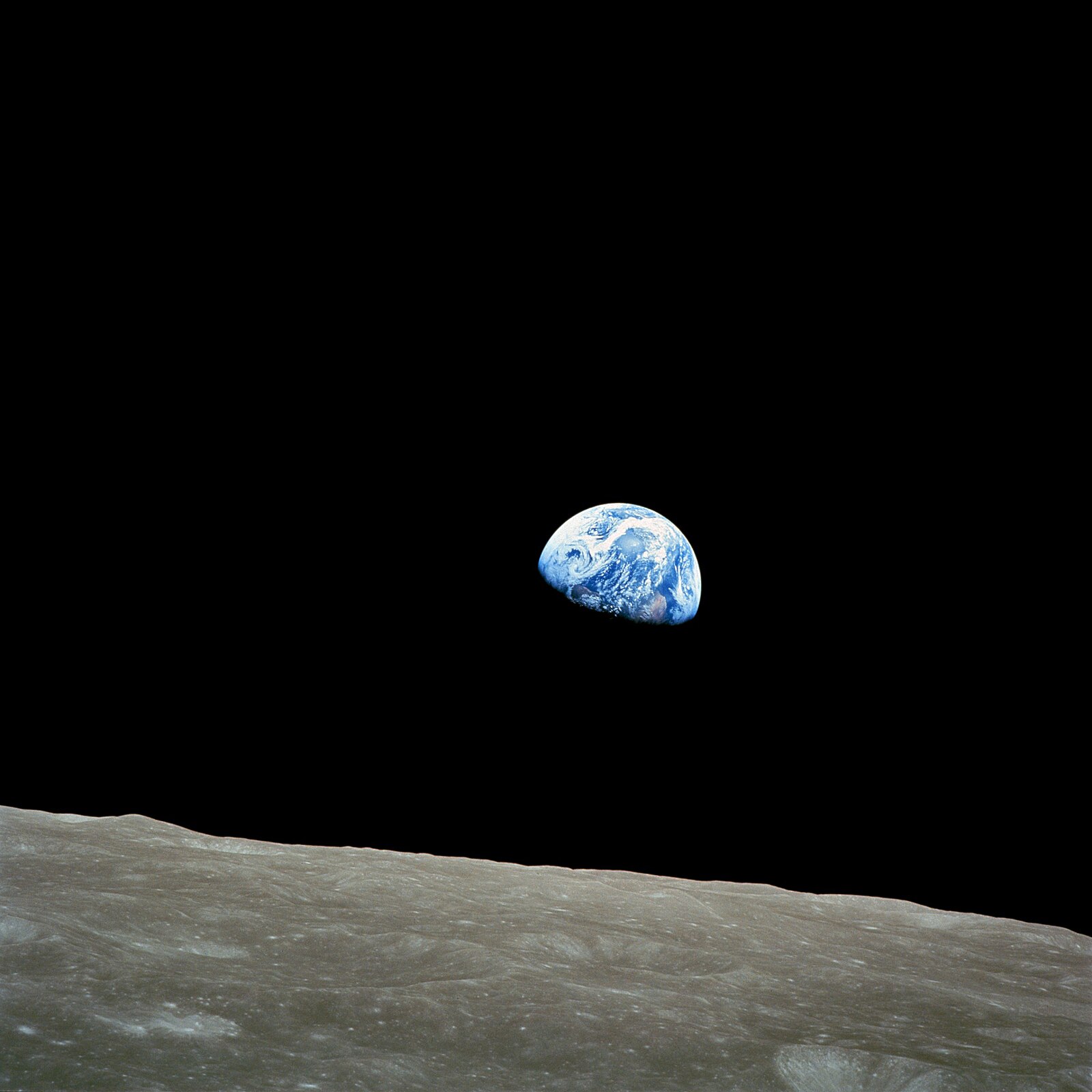
Wilderness photographer Galen Rowell later called it "the most influential environmental photograph ever taken." It's widely credited with catalyzing the modern environmental movement.
Apollo 11 — The Moment
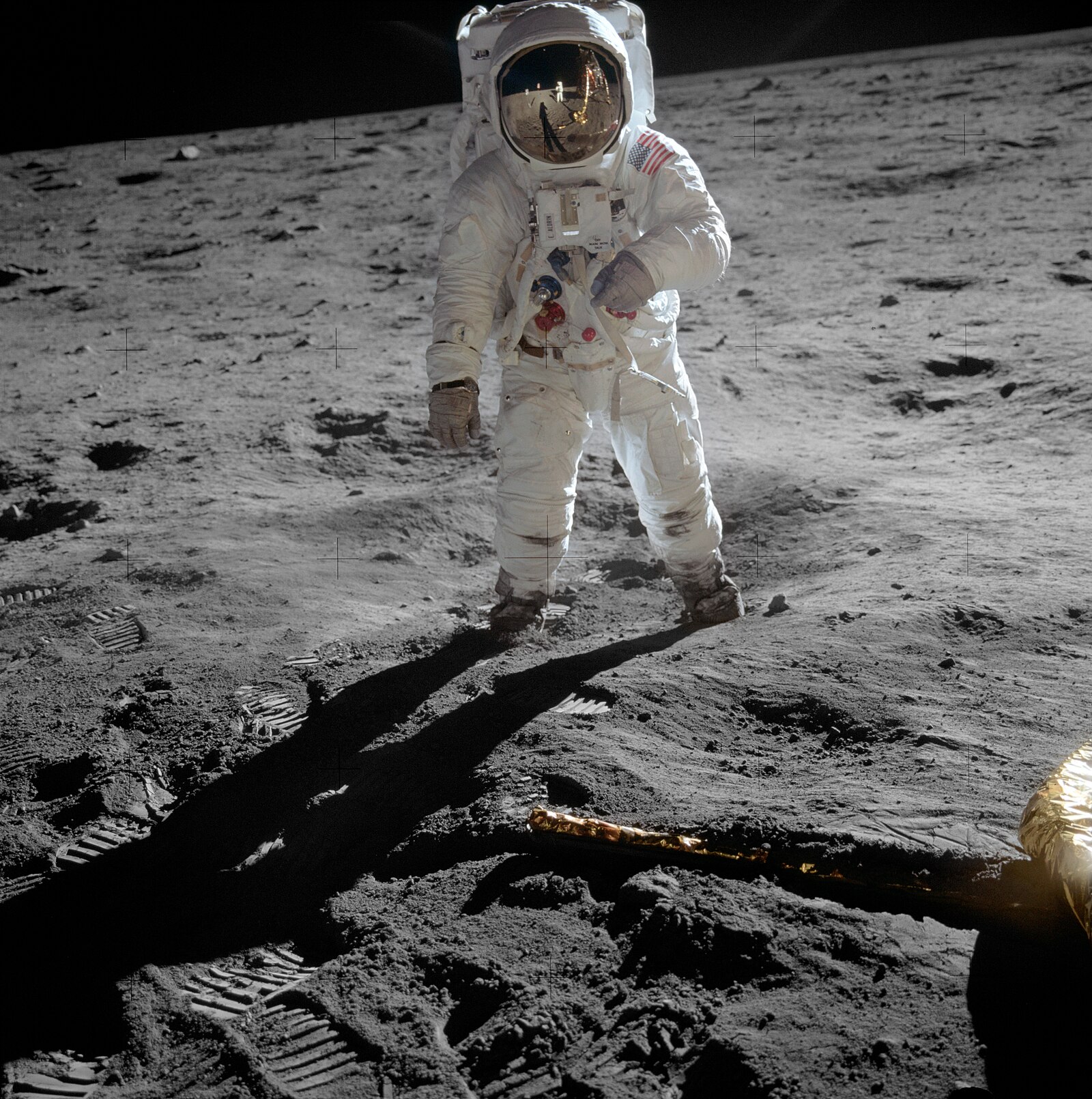
July 20, 1969. An estimated 600 million people — roughly one-fifth of the world's population — watched live as Neil Armstrong descended the ladder of the Lunar Module Eagle and placed a human boot on the surface of another world. Buzz Aldrin followed 19 minutes later, while Michael Collins orbited alone overhead in the Command Module Columbia — the loneliest human in existence, periodically losing radio contact with all of humanity as he passed behind the far side of the Moon.
Armstrong's first words on the surface are immortal: "That's one small step for man, one giant leap for mankind." (He always maintained he said "for a man" — the missing article lost to static and the limits of 1960s voice transmission.)
Apollo 13 — Successful Failure
On April 13, 1970, an oxygen tank exploded 330,000 kilometers from Earth, crippling the Service Module of Apollo 13. Commander Jim Lovell's calm radio call — "Houston, we've had a problem" — understated the severity: the crew of three was stranded in a damaged spacecraft with failing life support, dwindling power, and no way to turn around. Mission Control and the crew improvised a lifeboat using the Lunar Module, performed manual course corrections using Earth's terminator as an alignment reference, and jerry-rigged CO₂ scrubbers from spare parts and duct tape. All three astronauts returned safely. The mission never reached the Moon, but it remains one of NASA's finest hours — a demonstration that the real achievement of the space program was never just hardware, but the human capacity for creative problem-solving under impossible constraints.
Apollo 17 — The Last Footprints
On December 14, 1972, Gene Cernan became the last human to stand on the Moon. His final words before climbing back into the Lunar Module: "As we leave the Moon at Taurus-Littrow, we leave as we came and, God willing, as we shall return, with peace and hope for all mankind."
It would be 53 years, 3 months, and 18 days before humans returned to the lunar neighborhood.
Ron Howard's Apollo 13 (1995) is regularly cited as one of the most technically accurate space films ever made. Tom Hanks, Kevin Bacon, and Bill Paxton filmed weightless scenes aboard NASA's "Vomit Comet" — a KC-135 aircraft flying parabolic arcs — accumulating over 600 parabolas and roughly four hours of actual weightlessness. More recently, First Man (2018) captured the visceral, terrifying claustrophobia of early spaceflight — a useful corrective to the sleek, sanitized version most of us carry in our heads.
The Long Middle: Shuttles, Stations, and Robots
After Apollo, humans stopped going anywhere. For half a century, every crewed mission stayed in low Earth orbit — typically between 350 and 420 kilometers up. To put that in perspective: the Moon is 384,400 kilometers away. Low Earth orbit is roughly 0.1% of the way there. It's like bragging about exploring the ocean because you wade ankle-deep at the beach.
But that ankle-deep wading produced extraordinary science.
The Space Shuttle (1981–2011) flew 135 missions, deployed satellites, serviced the Hubble Space Telescope, built the International Space Station, and — critically — proved that reusable spacecraft were possible, even if the Shuttle's version of "reusable" required months of refurbishment between flights. It also killed 14 astronauts in two catastrophic failures: Challenger (1986, 73 seconds after launch) and Columbia (2003, during reentry). Both disasters reshaped NASA's safety culture and risk tolerance.
The International Space Station — a collaboration between the US, Russia, Europe, Japan, and Canada — has been continuously occupied since November 2, 2000. That's over 25 years of unbroken human presence in space. It's the size of a football field, orbits Earth every 90 minutes, and has hosted over 270 astronauts from 21 countries. It's a masterpiece of international engineering and diplomacy — built during a period when the participating nations frequently disagreed about everything except the importance of maintaining a laboratory in microgravity.
Meanwhile, robots went where humans couldn't. And they went far.
The Grand Tour: Voyager's Endless Journey
In the summer of 1977, NASA launched two spacecraft that would become humanity's farthest emissaries. Voyager 1 and Voyager 2 exploited a rare planetary alignment — occurring once every 176 years — that allowed a single spacecraft to swing past Jupiter, Saturn, Uranus, and Neptune using gravitational assists, like a billiard ball banking off cushions in slow motion across decades.
Voyager 2 is still the only spacecraft to have visited Uranus and Neptune. Voyager 1, on a faster trajectory, reached interstellar space on August 25, 2012 — crossing the heliopause at 121 AU to become the first human-made object to leave the solar system. As of 2026, Voyager 1 is over 166 AU from Earth (roughly 24.9 billion kilometers), still transmitting on about 23 watts of power — less than a refrigerator light bulb — with a signal that takes over 22 hours to reach us.
Voyager 1's computers have about 70 kilobytes of memory — less than a single email attachment. Its radio transmitter generates 23 watts. By the time that signal reaches Earth, it's about 10-26 watts — roughly 20 billion times weaker than a digital watch battery. NASA's Deep Space Network antennas, 70 meters wide, can still pick it up. The Voyagers are expected to have enough power to communicate until approximately 2036, nearly 60 years after launch.
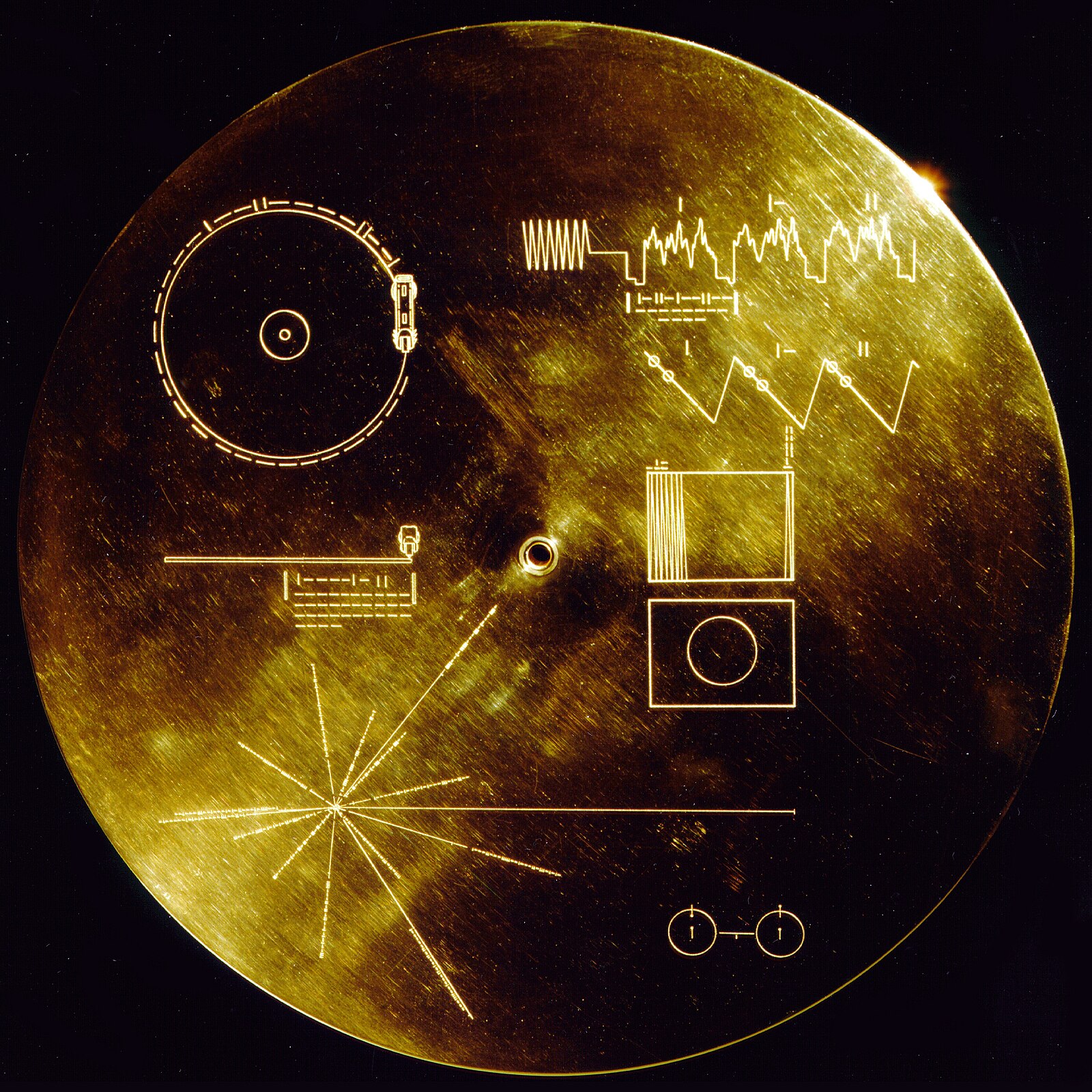
Each Voyager carries a Golden Record — a 12-inch gold-plated copper disc containing sounds and images selected to portray the diversity of life and culture on Earth. The record includes greetings in 55 languages, music from Bach to Chuck Berry, whale songs, and a pulsar map showing Earth's position relative to 14 pulsars. The cover diagram — encoding instructions for playing the record using the fundamental transition of hydrogen — serves as humanity's address label for the cosmos.
The logo of this blog is that very pulsar map from the Voyager Golden Record cover. It's a diagram of 14 pulsars — rapidly spinning neutron stars — with lines radiating from a central point (our Sun), each line's length and binary-encoded tick marks indicating a pulsar's precise frequency and distance. Any civilization that understands the hydrogen spin-flip transition can decode it and locate our solar system within the Milky Way. It is, quite literally, humanity's home address written in the language of physics. We chose it because it embodies everything this blog is about: curiosity, scientific ambition, and the stubborn human belief that someone, somewhere, might be listening. Voyager 1, still transmitting from interstellar space at over 166 AU from Earth, carries this map on its Golden Record as it drifts through the cosmos — the farthest thing we've ever built, carrying the most optimistic message we've ever sent.
In Star Trek: The Motion Picture (1979), the Enterprise encounters V'Ger — a fictional Voyager probe that gained consciousness during its travels and returned to Earth seeking its creator. The idea that our most distant ambassador might one day come home, transformed, is irresistible. Carl Sagan, who chaired the committee that assembled the Golden Record, understood this: "The spacecraft will be encountered and the record played only if there are advanced space-faring civilizations in interstellar space. But the launching of this 'bottle' into the cosmic 'ocean' says something very hopeful about life on this planet."
New Eyes: Hubble, Webb, and Seeing the Beginning
On April 24, 1990, the Hubble Space Telescope launched into orbit with a flawed mirror. A 2.2-micrometer error in the primary mirror's curvature — about 1/50th the thickness of a human hair — rendered its images blurry. In December 1993, Space Shuttle astronauts performed one of the most complex orbital repairs in history, installing corrective optics (essentially spectacles for a telescope). The fix worked. Hubble went on to produce some of the most important astronomical observations ever made: the Hubble Deep Field images revealed thousands of galaxies in a patch of sky the size of a tennis ball held at arm's length, and Hubble's observations of Type Ia supernovae led to the discovery that the universe's expansion is accelerating — a finding that earned Saul Perlmutter, Brian Schmidt, and Adam Riess the 2011 Nobel Prize in Physics.
Then came Hubble's successor, and it was worth the wait.
The James Webb Space Telescope launched on Christmas Day 2021 on an Ariane 5 rocket, traveled 1.5 million kilometers to the Sun-Earth L2 Lagrange point, and unfolded its 6.5-meter gold-plated beryllium mirror — a process involving 344 single points of failure, any one of which could have ended the mission. None did. Webb's first science images, released in July 2022, immediately shattered records: galaxies observed just 290 million years after the Big Bang, atmospheric compositions of exoplanets measured in detail, and stellar nurseries photographed in infrared with resolution that left professional astronomers openly weeping on live television.
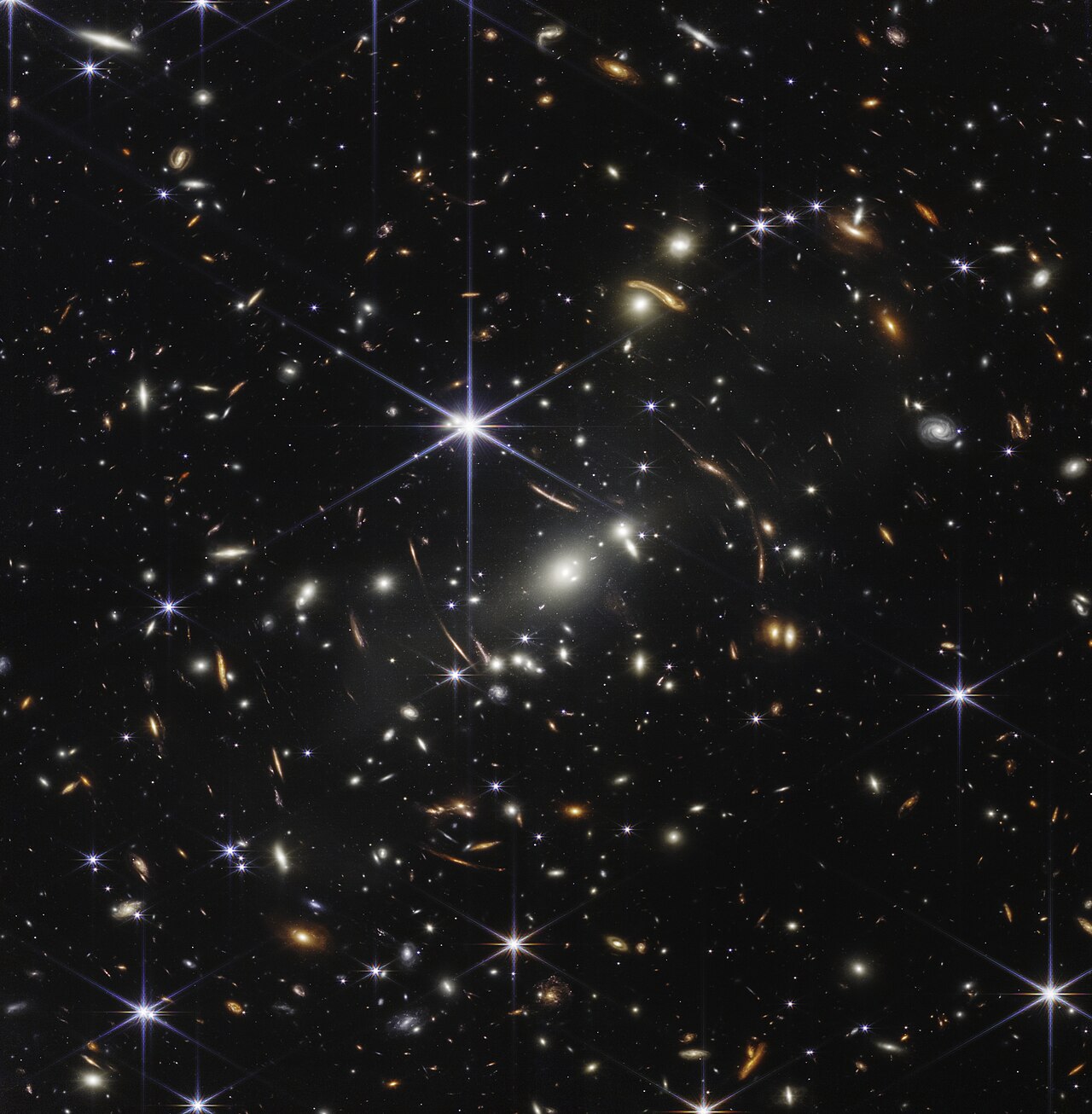
Webb's development spanned over 25 years and cost approximately $10 billion. Its sunshield, the size of a tennis court, keeps the telescope at -233°C while the sun-facing side reaches 85°C. In May 2024, JWST identified JADES-GS-z14-0, a galaxy observed just 290 million years after the Big Bang — the most distant galaxy ever confirmed. The telescope has also detected organic molecules in the atmospheres of exoplanets, including K2-18 b, a planet 8.6 times the mass of Earth in the habitable zone of its star.
Red Planet, Robotic Pioneers
Mars has been humanity's robot proving ground. Since NASA's Sojourner rover (1997) — a microwave-oven-sized machine that traveled a grand total of 100 meters — our robotic emissaries have grown in capability, ambition, and sheer audacity.
Spirit and Opportunity (2004) were designed for 90-day missions. Spirit lasted six years. Opportunity lasted fourteen, traveling 45.16 kilometers across the Martian surface before a planet-encircling dust storm starved its solar panels in June 2018. NASA's final signal to the rover was a recording of Billie Holiday's "I'll Be Seeing You."
Curiosity (2012) carries a nuclear power source and a full chemistry laboratory. It discovered that Mars once had liquid water, organic molecules, and conditions potentially suitable for microbial life. Over 13 years later, it's still operating.
But the most astonishing Mars achievement involved a 1.8-kilogram helicopter.
Ingenuity arrived on Mars on February 18, 2021, tucked under the belly of the Perseverance rover. On April 19, it achieved the first powered, controlled flight on another planet — what NASA called its "Wright Brothers moment." The comparison was deliberate: a piece of fabric from the Wright Brothers' 1903 Flyer was attached under Ingenuity's solar panel, just as Neil Armstrong had carried a Wright Flyer fragment to the Moon in 1969. Designed for five test flights over 30 days, Ingenuity eventually completed 72 flights across nearly three years, covering 17 kilometers and reaching altitudes of 24 meters before a rotor blade was damaged on its final flight in January 2024.
We can now say that human beings have flown a rotorcraft on another planet!
— MiMi Aung, Ingenuity Project Manager, April 19, 2021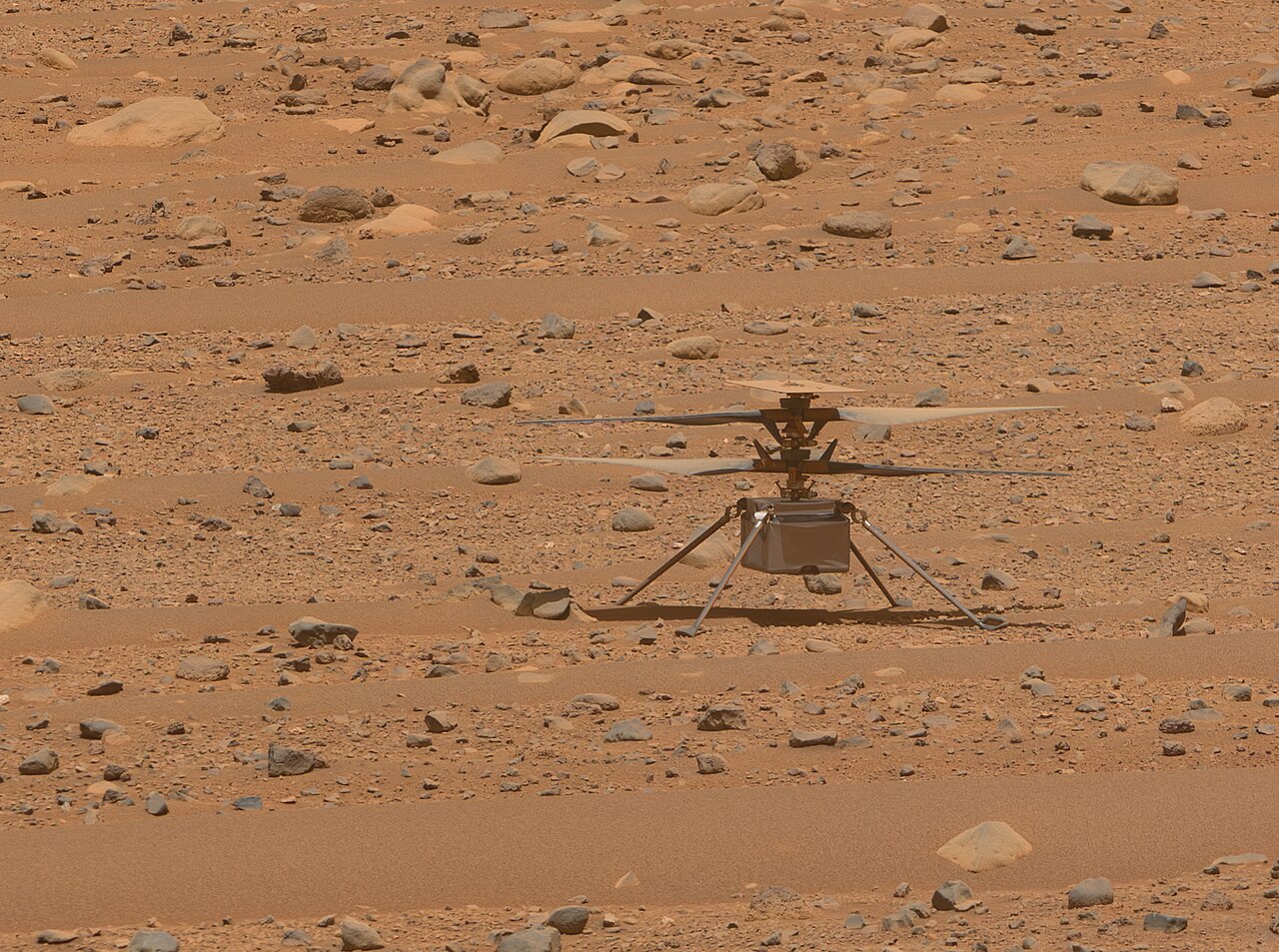
Andy Weir's The Martian (2011, film 2015) did for Mars exploration what Apollo 13 did for the Moon program: made the engineering tangible and the problem-solving compelling. Mark Watney's motto — "I'm going to have to science the shit out of this" — captures the improvisational spirit that defines actual space missions. Ridley Scott's film was so technically grounded that NASA used its release as an outreach opportunity, with real Mars scientists doing press alongside the cast.
The Commercial Revolution: Rockets That Come Home
For sixty years, going to space meant building an extraordinarily complex machine, using it once, and dumping it in the ocean. Imagine if you had to build a new Boeing 747 for every transatlantic flight and then crash it into the Atlantic after landing. That was the economics of spaceflight. No wonder it was expensive.
On December 21, 2015, SpaceX landed a Falcon 9 first-stage booster vertically at Cape Canaveral after delivering 11 satellites to orbit — the first time an orbital-class rocket booster had ever been recovered intact. Elon Musk, watching from SpaceX's launch control, heard the sonic boom and assumed it had exploded. It hadn't.
The numbers tell the story. Building a new Falcon 9 first stage costs roughly $30 million. Refurbishing a recovered one costs under $300,000. As of April 2026, SpaceX has successfully landed Falcon 9 boosters 578 times. Individual boosters have flown as many as 34 missions. The Falcon 9's launch cost — approximately $2,700 per kilogram to orbit — is a fraction of the Space Shuttle's estimated $54,500 per kilogram. In 2024 alone, SpaceX completed 134 Falcon launches, accounting for over half of all orbital launches worldwide.
Reusable rockets didn't just reduce cost — they fundamentally changed the cadence of space access. When you can launch every few days instead of every few months, space stops being an event and becomes infrastructure. SpaceX's Starlink constellation — over 6,000 satellites providing global internet — would be economically impossible without reusable rockets. The same economics make a sustained lunar presence and eventual Mars missions financially conceivable for the first time.
SpaceX also changed who goes to space. On September 15, 2021, the Inspiration4 mission launched four civilians into orbit with no professional astronauts aboard — the first all-civilian orbital spaceflight. On May 30, 2020, SpaceX's Crew Dragon became the first commercial spacecraft to carry NASA astronauts to the ISS, ending a nine-year gap during which America had no domestic crew launch capability.
Artemis: The Return
The Artemis program — named for Apollo's twin sister in Greek mythology — is NASA's plan to return humans to the Moon and, eventually, establish a sustained presence there. If Apollo was a sprint driven by Cold War urgency, Artemis is a marathon driven by science, commerce, and the long game of making humanity a multi-world species. And it brings us full circle — back to the four astronauts we met at the start of this story.
Artemis I — Proving the Hardware
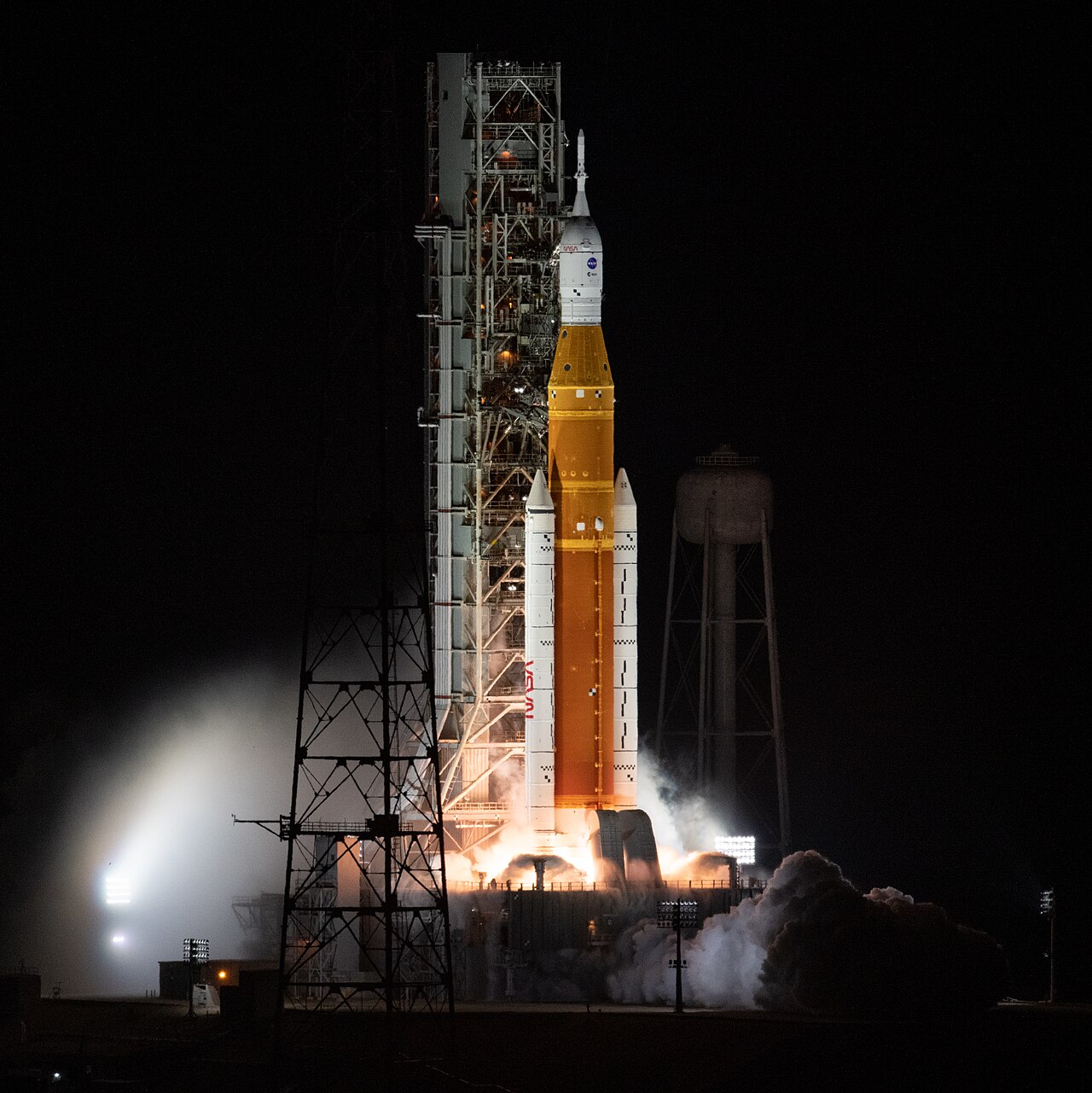
On November 16, 2022, the Space Launch System — the most powerful rocket ever flown, generating 8.8 million pounds of thrust at liftoff — launched an uncrewed Orion spacecraft on a 25.5-day journey around the Moon. Orion traveled 434,522 kilometers from Earth, farther than any spacecraft designed to carry humans had ever gone. The mission validated the SLS, the Orion capsule, and the European Service Module. It also revealed an issue: the ablative heat shield experienced greater-than-expected erosion during reentry — a problem that would dominate engineering discussions for the next three years.
The Crew
On April 3, 2023, NASA named the four astronauts who would carry humanity back to the lunar neighborhood — the crew we introduced at the top of this post, now aboard Integrity and approaching the Moon:
Former Chief of the Astronaut Office, Navy test pilot, ISS veteran. At 50, the oldest person to travel beyond low Earth orbit. The Frank Borman of a new generation.
First Black astronaut to live on the ISS for a long-duration assignment (Crew-1). Now the first person of color to travel to the Moon.
Holds the record for the longest single spaceflight by a woman: 328 days. Participated in the first all-female spacewalks. Now the first woman to fly to the Moon. Self-described "space plumber" — she fixed the toilet aboard Orion.
CF-18 fighter pilot and colonel in the Canadian Armed Forces. The first non-American and first Canadian to travel to the Moon. This is his first spaceflight.
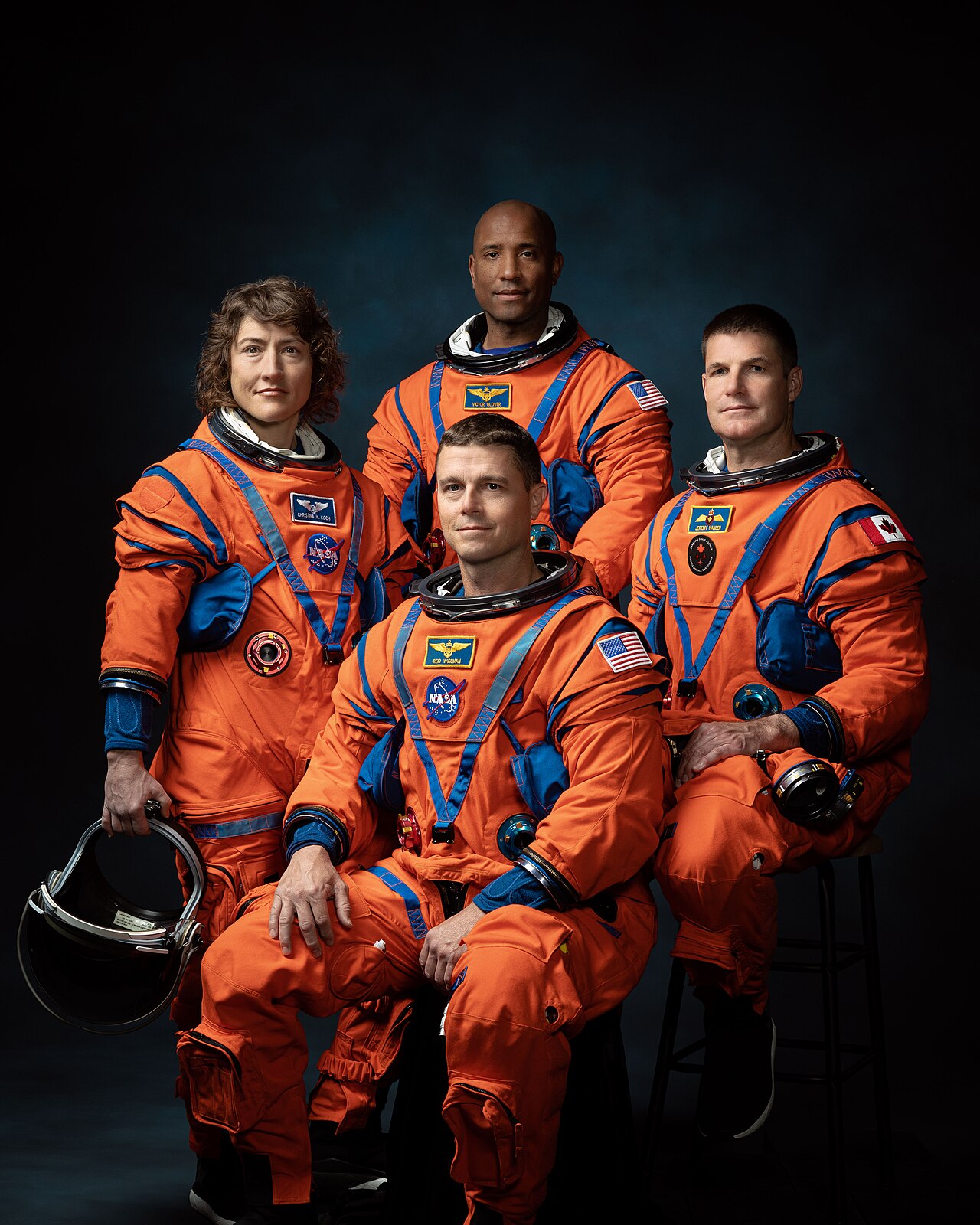
The mission has already made history several times over. Glover is the first person of color, Koch the first woman, and Hansen the first non-American to travel beyond low Earth orbit and toward the Moon. When the four astronauts completed the translunar injection burn and left Earth orbit, they became the first humans to enter deep space since Apollo 17's crew in December 1972 — a gap of over 53 years.
The Orion spacecraft named Integrity carries a zero-gravity indicator designed by 8-year-old Lucas Ye of Mountain View, California — a plush mascot named "Rise," depicting the Moon wearing Earth as a baseball cap, inspired by the iconic Earthrise photograph from Apollo 8. When it begins floating inside the cabin, the crew knows they've entered weightlessness.
The mission carries AVATAR (A Virtual Astronaut Tissue Analog Response) — organ-on-a-chip devices that mimic individual astronaut organs to study the effects of deep-space radiation and microgravity on human health. This is the first time such devices have been tested outside the Van Allen belts. The mission also includes ARCHeR (Artemis Research for Crew Health & Readiness), which monitors crew sleep patterns and physical health in real-time during deep-space transit.
What Comes Next
Currently in progress. Ten-day mission sending four astronauts around the Moon and back.
Originally planned as the first landing, now redesigned to test rendezvous and docking in low Earth orbit with SpaceX's Starship HLS and Blue Origin's Blue Moon lander, plus the new AxEMU spacesuit.
Two astronauts will descend to the lunar south pole — a region never visited by humans — while two remain in orbit. Targeted stay: approximately one week.
Second landing mission. NASA expects to begin constructing permanent lunar surface infrastructure during this mission, with approximate annual landings thereafter.
The Lunar Gateway — a planned orbital space station around the Moon — was cancelled in March 2026. NASA is instead focusing resources on building infrastructure directly on the lunar surface, near the south pole where permanently shadowed craters may contain water ice — a resource that could be converted to drinking water, breathable oxygen, and rocket fuel. If confirmed and accessible, lunar water ice would transform the Moon from a destination into a gas station.
Apollo was a Cold War sprint: beat the Soviets, plant a flag, come home. Six landings, three years, then it was over. Artemis is an institutional marathon: build sustainable infrastructure, develop commercial partnerships (SpaceX, Blue Origin, Axiom Space), test technologies for eventual Mars missions, and — critically — include international partners. Apollo was about proving we could. Artemis is about proving we can stay.
The Overview Effect
In 1987, author Frank White coined the term "Overview Effect" to describe the cognitive shift reported by astronauts who view Earth from space. It's not just aesthetic appreciation — it's a fundamental reframing of identity. National borders, which dominate our maps and our politics, are invisible from orbit. The atmosphere that sustains all known life is, from space, a paper-thin blue haze. Every war, every love story, every symphony ever composed happened on that fragile marble.
Every astronaut reports some version of this experience. Edgar Mitchell (Apollo 14) described it as "an instant global consciousness." Ron Garan (ISS) called it "the sobering contradiction between the beauty of our planet and the unfortunate realities of life on our planet for many of its inhabitants."
Right now — as I'm writing this — four humans are closer to the Moon than anyone has been in over half a century. Reid Wiseman, Victor Glover, Christina Koch, and Jeremy Hansen are seeing with their own eyes what cameras and robots have been showing us for decades: that Earth is small, space is vast, and the distance between the two is measured not just in kilometers but in courage, engineering, and the stubborn human refusal to accept that some things are impossible.
You can track the Orion spacecraft's position in real-time on NASA's official Artemis Real-time Orbit Website (AROW).
Tsiolkovsky was right. The cradle was never meant to hold us forever.
We're climbing out.
I don't know what we all expected to see... but you could see the entire globe, from pole to pole.
— Reid Wiseman, Commander, Artemis II, April 2, 2026If you enjoyed this journey from captured V-2 rockets to the far side of the Moon — share it with someone who's ever looked up at the night sky and wondered what it would take to get there.